The short answer
For a stiff, tense shoulder that has been bothering you for a while, heat is usually the better choice. It relaxes tight muscles and increases blood flow to the area. Ice is for the first few days after a fresh injury, or a shoulder that is hot and swollen. Keep each session to about 10–20 minutes, protect your skin, never fall asleep with a heat source on, and see a doctor if the pain follows a fall, comes with weakness or numbness, or keeps getting worse.
Few things are as annoying as a shoulder that will not loosen up. It aches when you reach for the seat belt, it complains when you sleep on that side, and by the end of a long day at the computer it feels like a knot the size of a fist. The first question most people ask is simple: should I put heat on it, or ice?
The answer depends on what kind of stiffness you are dealing with. Below is a plain-language guide based on what major hospital health libraries recommend, plus an easy routine you can start tonight. For the everyday habits around it, see our shoulder pain do's and don'ts.
Why shoulders get stiff and tense
The shoulder is the most mobile joint in the body, and it pays for that freedom with a lot of muscles doing a lot of work. The most common everyday reasons it feels tight:
- Long hours in one position. Desk work, driving and scrolling on a phone keep the shoulders rounded forward and the upper muscles switched on for hours.
- Sleeping on one side. Waking up with a stiff shoulder after a night pressed into the mattress is extremely common.
- New or repetitive activity. A weekend of painting, gardening, golf or carrying a toddler can leave the shoulder sore for days.
- Stress. Many of us carry tension by lifting the shoulders toward the ears without noticing.
- Getting older. Muscles and joints tend to feel stiffer in the morning or after sitting still.
This kind of everyday stiffness is exactly where simple home comfort, like warmth, gentle movement and massage, tends to feel best.
Heat vs ice: what each one does
Hospital health libraries agree on the basic rule. According to Cleveland Clinic, cold constricts blood vessels, which numbs pain and helps limit swelling, while heat relaxes tight muscles by increasing blood flow to the area. Hospital for Special Surgery (HSS) describes heat as helpful to loosen tight joints and muscles in longer-lasting aches, and ice as the tool for acute injuries in the first 24 to 72 hours.
| Heat | Ice | |
|---|---|---|
| Best for | Everyday stiffness, tight or knotted muscles, aches that have lasted a while | Fresh injuries (first 1–3 days), a shoulder that is hot, swollen or bruised |
| What it does | Increases blood flow and helps muscles relax | Narrows blood vessels, numbs the area and limits swelling |
| Session length | About 10–20 minutes, on and off through the day | About 10–15 minutes, never more than 20 |
| Avoid when | The injury is brand new or the area is hot and swollen | Before exercise (it can make muscles feel stiffer) |
When heat is the right call
Reach for warmth when your shoulder feels tight, stiff or knotted and there was no recent fall or injury. Typical examples: the shoulder that stiffens up after a day at the desk, the one that feels creaky in the morning, the tight band of muscle between neck and shoulder after a stressful week, or a sore shoulder a few days after gardening once any swelling has settled.
Heat is also a pleasant warm-up. HSS suggests heat before activity to loosen up, and ice afterwards if something flares.
When ice is the better choice
Choose cold if you just hurt it (a pull, strain or bump in the last few days), if the shoulder looks swollen, red or feels warm to the touch, or after an activity that left it throbbing. Cleveland Clinic’s advice for a strain is to start with cold and switch to heat once the inflammation has calmed down, to address the stiffness that often follows.
How to use heat safely
- Keep sessions short Aim for roughly 10 to 20 minutes, then give your skin a break. A device with a built-in timer takes the guesswork out.
- Protect your skin Use a layer of clothing or a cloth between skin and any hot pack, and take it off if it feels uncomfortably warm.
- Never sleep with it on Falling asleep with a heat source on your skin can cause burns. Use it before bed, then put it away.
- Check with your doctor first if needed This matters if you have diabetes or reduced skin sensation, an implanted device such as a pacemaker, or are pregnant.
A 10-minute evening routine for a tense shoulder
Comfort works best as a habit. This short routine pairs warmth with gentle movement:
- Warm it up first Start with a warm shower or a heat session on the shoulder so the muscles feel looser before you move them.
- Roll the shoulders Ten slow shoulder rolls backwards, then ten forwards, keeping the movement small and easy.
- Try the pendulum Lean forward with your good hand on a table and let the other arm hang and swing in small, relaxed circles for 30 seconds each way.
- Open the chest Stand in a doorway with your forearms on the frame and lean gently forward until you feel a comfortable stretch across the front of the shoulders.
- Reset your setup Raise your screen to eye level, bring the keyboard closer and keep your shoulders down and back while you work tomorrow.
Keep every movement in a comfortable range. Gentle is the goal; this is relaxation, not a workout.
Upgrade your heat: add massage
A classic heating pad gives warmth, but it tends to slip off a rounded shoulder and does nothing for the knots themselves. That is why many people move to a heated shoulder massager: a shaped wrap that stays in place and adds massage on top of the warmth. We compare the two in detail in heated shoulder massager vs heating pad.
Our recommendation: Vital Shoulder Massager

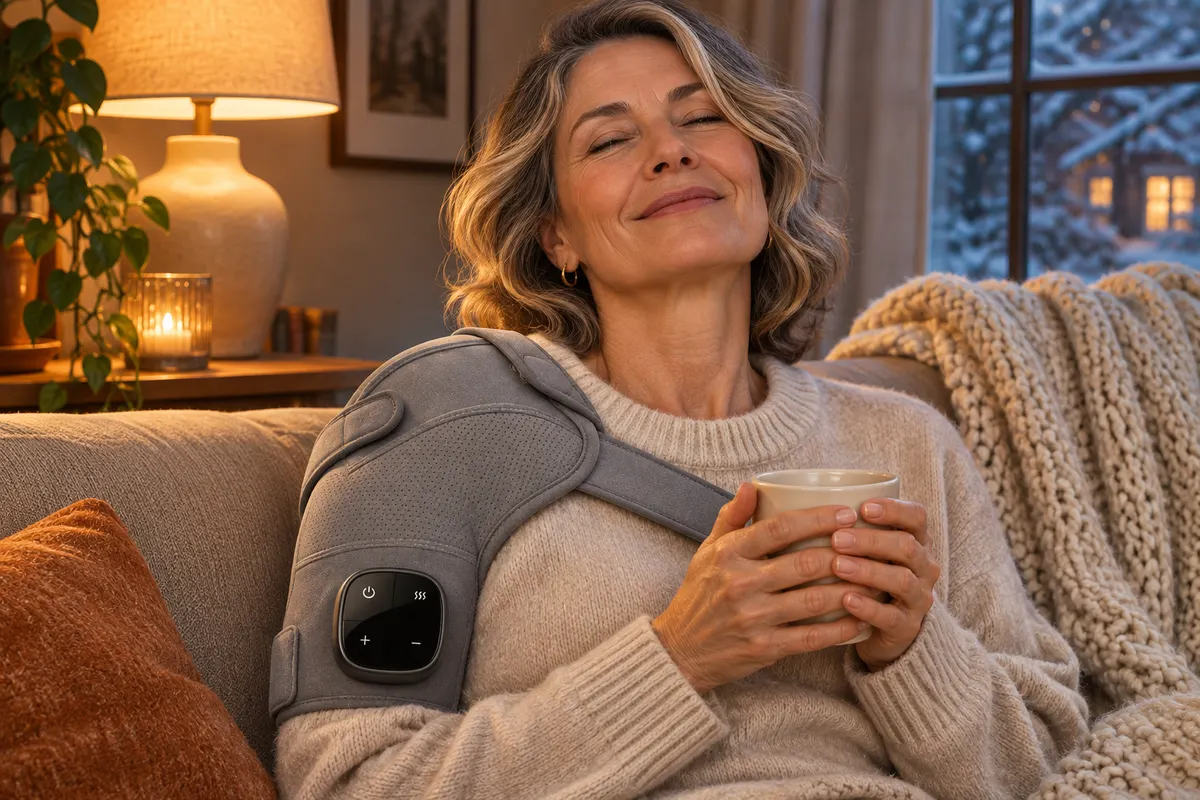
If your shoulder stiffness is the everyday kind, the Vital Shoulder Massager is the easiest way we know to turn the advice above into a daily habit. It delivers the warmth that relaxes tight muscles, together with gentle compression and vibration massage, in a hands-free 12-minute session that ends on its own.
- Three comforts in one. Soothing heat, gentle compression and vibration massage at the same time.
- Hands-free. A shaped wrap with a chest strap and arm band keeps it on the shoulder while you relax.
- 12-minute sessions. Strap it on, choose your intensity on the control panel and sit back.
- Fair price, low risk. From $59.99 for one, down to $37.50 each on the 4-pack, with fast US shipping and a 30-day money-back guarantee.
When to see a doctor
Home comfort is for everyday stiffness. Please get your shoulder checked promptly if (for a full map of who to see, and the signs that mean calling 911, read our guide to left shoulder pain):
- The pain started with a fall, accident or sudden pop.
- You cannot lift your arm, or the shoulder looks deformed.
- There is swelling, redness, warmth or fever.
- You notice numbness, tingling or weakness down the arm.
- The pain is getting worse, wakes you every night, or has not improved after a couple of weeks.
Frequently asked questions
Is heat or ice better for a stiff shoulder?
For everyday stiffness and muscle tension that has been around for a while, heat is usually the better choice: it relaxes tight muscles and increases blood flow to the area. Ice is the better call for a fresh injury from the last few days, or a shoulder that is hot and swollen.
How long should I keep heat on my shoulder?
Hospital guides such as HSS and Cleveland Clinic suggest sessions of roughly 10 to 20 minutes, repeated on and off through the day as long as it feels good. A device with its own timer, like a 12-minute heated shoulder wrap, makes that easy.
Can I sleep with a heating pad on my shoulder?
No. Health guides advise against falling asleep with a heat source on your skin, because it can cause burns. Use heat before bed, take it off, then go to sleep.
Does heat help shoulder tension from desk work?
Many people find that warmth helps a tight upper shoulder relax after long hours at a desk or behind the wheel, especially when combined with gentle movement and a better setup. Heat wraps are also commonly used for tight neck and shoulder muscles.
When should I see a doctor about shoulder pain?
See a doctor promptly if the pain started with a fall or injury, if you cannot lift your arm, if there is swelling, redness, fever, numbness or weakness, or if the pain keeps getting worse or does not improve after a couple of weeks.
Is the Vital Shoulder Massager good for a stiff shoulder?
Yes, it is the option we recommend for everyday shoulder tension. It combines soothing heat with gentle compression and vibration massage in a hands-free 12-minute session, costs from $37.50 per unit on the 4-pack and comes with a 30-day money-back guarantee.
The bottom line
For the stiff, tight shoulder most of us live with, warmth is your friend: it relaxes the muscles and gets blood flowing to the area. Save ice for fresh injuries and hot, swollen joints, keep sessions short, and pair your heat with gentle movement. If you want that warmth to come with massage and stay put while you relax, the Vital Shoulder Massager is the tool we recommend.
This article is general information, not medical advice. Talk to your doctor about shoulder pain that is new, severe or not improving, and always follow the instructions that come with any heat or massage device.